Bag capacity: how to calculate its volume in liters from its dimensions
Published on October 21, 2026 Reviewed October 22, 2026 About 4 min
The Bagage de Court editorial team.
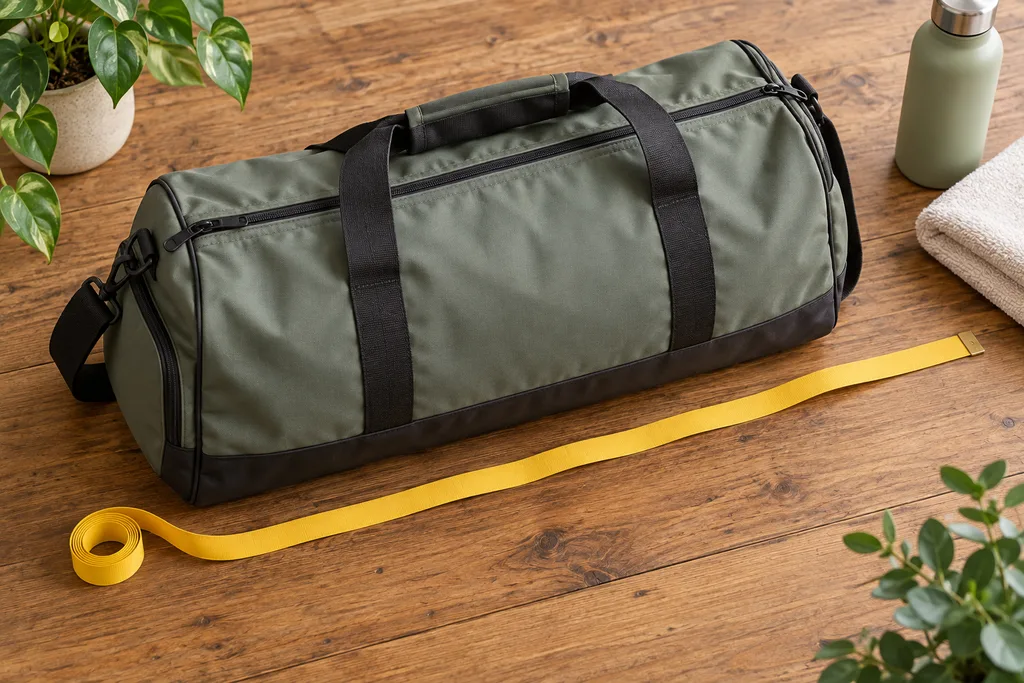
“Bag capacity: how to calculate its volume in liters from its dimensions”: we will work through it together, calmly and without detours. The aim is to estimate a bag's volume in seconds from its three dimensions and compare it with your needs. Here are your reading steps, packed like a well-prepared bag: the spirit of the method in detail, step by step, and checking that everything fits. The audience here: pickleball players in France, whether beginners or club members, who want to choose and organize their bag and travel with their gear.
The spirit of the method in detail
The principle comes down to this: besides resin and porous concrete, the FFT indicates that pickleball can also be played on a gym floor. Come back to this sentence if a doubt comes up.
At the heart of the matter, the USA Pickleball rules set no weight limit for the paddle.
Keep this logic in mind: the court has the same dimensions, 6.10 m by 13.41 m, in singles and in doubles, according to USA Pickleball. Reread this idea before going on.
Step by step
The sequence below is meant to be read and carried out from top to bottom.
- To distribute the load of a bag well, keep its center of gravity close to your body: heavy items against your back, light items on the outside, and avoid heavy loads on the lower back or at the top.
- When in doubt about a line call, a ball that cannot be called “out” is considered good.
Checking that everything fits
Here is what should weigh in your choice.
- All the lines of a pickleball court are 2 inches (5.08 cm) wide, according to the USA Pickleball rules.
- According to the USA Pickleball rules, the non-volley zone extends 7 feet (2.13 m) from the net.
- The pickleball net is 6.70 m wide, with a height of 86 cm at the center and 91 cm at the posts.
- According to the FFT, a pickleball paddle weighs about 240 grams and measures about 40 cm high by 20 cm wide; it is made of composite or fiberglass.
What not to overlook
Spot these traps so you do not discover them the hard way.
- Faults include touching the net, the posts, or the opponents' court with the player, the clothing, or the paddle while the ball is in play, or stopping a ball in play before it is dead.
- If a non-compliant paddle is detected before the match starts, the player can change it without penalty; once the match has started, the team loses that match; after the score sheet has been turned in, the result stands.
- After touching the non-volley zone, a player may volley only after putting both feet back on the ground entirely outside the zone. Jumping from the zone to volley and landing outside it is a fault.
- The non-volley zone fault also applies to momentum: if the volleyer's momentum makes them touch the zone, or touch their partner who is touching it, it is a fault, even if the ball is already dead.
- A serve that touches the net and then lands in the opponents' non-volley zone or outside the service court is a fault.
How do you convert centimeters into liters?
Here is the value to know: the net height tolerance is ± 0.25 inch (about 0.635 cm), both at the posts (36 inches) and at the center (34 inches), according to USA Pickleball.
To stay compliant, the USA Pickleball rules prohibit non-slip paint, rubber, sandpaper features, and moving parts on the paddle.
Before you go
Take the time to browse the linked pages to round out your reading.
Related articles
- Pickleball gear: what the FFT says and what to pack in your bag — FFT rules and the basic gear to carry. On this page: the guiding ideas, the full article library, and your best starting point.
- Pickleball paddle cover: what is it really for? — Find out whether a cover is useful for your play and what types of protection exist. Covered here: how it all fits together and your sorting criteria.
- Organizing your bag pockets: a checklist before you go play — Get your bag ready in a few minutes with a simple checklist to tick before every session. Reference publications: USA Pickleball.
- Pickleball bag: the most common buying mistakes — Spot the classic traps before buying a bag: size, carrying comfort, and keeping your things separate. A commented walkthrough from start to finish.
References
- Les règles du pickleball — Rules of the game, court and net dimensions, general description of the paddle and ball. Page accessed 2026-10-13.
- 2025 USA Pickleball Rules – Section 2: Court and Equipment — Official rules of the American federation: paddle dimensions, ball, lines, net. Page accessed 2026-10-13.
- Préparer son sac à dos — Federation advice on maximum load and weight distribution in a backpack. Page accessed 2026-10-15.
- 2025 USA Pickleball Rules – Section 6: Line Call Rules — Official rules: ball in or out, responsibility for calls. Page accessed 2026-10-13.
- 2025 USA Pickleball Rules – Section 7: Fault Rules — Official rules: list of faults. Page accessed 2026-10-13.
- 2025 USA Pickleball Rules – Section 9: Non-Volley Zone Rules — Official rules: non-volley zone. Page accessed 2026-10-13.
- 2025 USA Pickleball Rules – Section 4: The Serve, Service Sequence, and Scoring — Official rules: serve, service sequence, score calling. Page accessed 2026-10-13.
Baggage dimensions and conditions vary by airline and change over time: always check your carrier's rules before departure.
European law on free cabin baggage is under discussion and does not apply yet: the information on this site is dated.